For When The Church Hurts You – Short reviews from my reading pile #1.
 It’s been a habit of mine to review every (substantial) book that I read. This hasn’t happened in the second half of 2021. Changes to my job, while delightful in many ways, have left me with barely the time and energy to attend to the word of God and prayer, let alone to the reading and mulling-over of books in general. This too will pass.
Instead of reviewing each book in-depth, I’m attempting a broader overview. Because the books I have read fall into two broad categories, I will do this in two parts. The second part, coming, will engage with books that critique our current industrial forms for expressing Christian religion. They have helped me ponder some subtle revolutionary ways of being God’s people that are both ancient and future.
In this first post, I’m drawing on a different theme. It has reached a crescendo this year, cresting at the time I reviewed Langberg’s Redeeming Power. In the background is the fallout from the abuses of Ravi Zacharias. An accompaniment that has swelled in and out (with its, um, “variable” release schedule) is the Rise and Fall of Mars Hill podcast.
This theme is a mournful lament to the simple fact that church culture can be, and often is, toxic. Gill and I have been processing our own ecclesiastical trauma; Langberg and others have helped us do that. One of our key realisations has been to accept the reality of our abuse. Unlike others, we are not victims of a malicious perpetrator. Nevertheless, we have been hurt, and it wasn’t just “one of those things”; it has been, at various times, due to toxic culture, vicious immaturities, and collective negligence. We can’t just shrug it off; we have been wounded and the healthy thing is to pursue healing.
And it is not just about us. Our children have, unavoidably, witnessed what has been done to us; and have been on the receiving end of ostracism and shunning themselves. They have carried emotional loads which have been indirectly, but obviously, foisted upon them by inept church leaders unwilling to carry their own burdens, let alone the yoke of Christ to which they laid claim. Our children are learning to discern between the way of Christ and the way of his people, and how to count the life-giving cost of the former while standing firm against the latter. In due course they may share their own story; I will not go further than that here.
Similarly, by God’s grace, we have encountered a number of others who have fallen under the wheels of the religio-industrial complex. Amongst their experiences are the effects of being silenced, ostracised, manipulated, or made subservient to a form of mission that is more about ecclesiastical ego than ecclesiological pursuit of God’s good kingdom. The deconstruction of church is real. We are learning how to hear these stories, to undergo our own as-healthy-as-can-be deconstruction (because God’s grace abounds when we are undone), while holding fast to the hope that is true, and truly, within us.
These books have been a part of that journey this last half-year.
Jesus and John Wayne : How white evangelicals corrupted a faith and fractured a nation – Kristin Kobes Du Mez
Not All Who Wander (Spiritually) Are Lost : A story of church – Traci Rhoades
Something’s Not Right : Decoding the hidden tactics of abuse and freeing yourself from its power – Wade Mullen
Soul Keeping : Caring for the most important part of you – John Ortberg
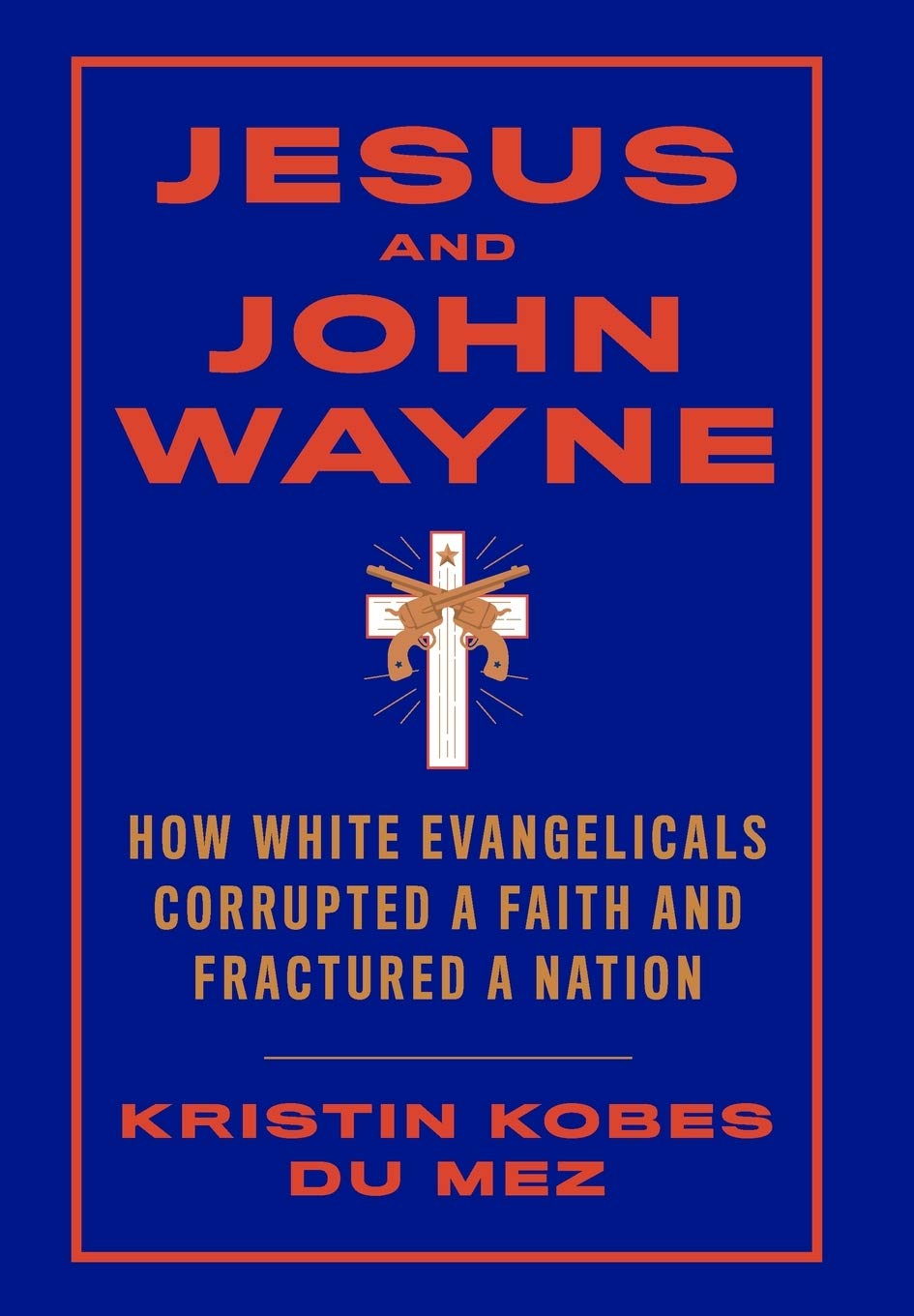
Jesus and John Wayne by Kristin Kobes Du Mez has become such a touchstone book that it’s almost a meme. It is closely tied to the American evangelical scene and while it gives some helpful insight, it also perpetuates the Trumpian vs Wokeist culture wars that are besetting the West of late. Consequently, some love the book, and others loathe it.
Du Mez describes a cultural phenomenon: “White evangelicals” who “piece together” “intolerance towards immigrants, racial minorities, and non-Christians” and “opposition to gay rights and gun control” in which “a nostalgic commitment to rugged, aggressive, militant white masculinity serves as the thread binding them together into a coherent whole” (page 4). Hence, Christians have come to worship and follow a proverbial John Wayne more than Jesus Christ. At times my evangelical friends need to read and inwardly mark this critique; at other times it is just an evangelical straw man, certainly with respect to what evangelicalism means outside of the US, particularly in the two-thirds majority Christian world.
The deconstruction, however, is helpfully real. Billy Graham is dealt with (page 23), along with the likes of Falwell (page 49), Dobson (page 78), Eldredge (page 173), and, of course, Driscoll (page 193). It is a valid unveiling of the late 20th Century ecosystem of a religious industry forming and feeding a marketplace of conservative ideals.
So how does this speak to the theme of ecclesiastical trauma? On the one hand, I am with Du Mez. I first encountered American messianicism over a quarter of a century ago while working for a mission agency; it disturbed me then, it nauseates me now. There’s a cultish idolatry in it, and while the blatant stars-and-stripes version isn’t really prevalent outside of the US, the culture permeates. How can it be that church-by-default in the 2020’s is basically Willow Creek of the 1990’s, complete with it’s success-driven if-you-ain’t-growing-there’s-something-wrong-with-you marketeer method of managerial machoism? I’ve been under that bus, and too many of my friends have also. Du Mez gives insight into both the politics and social psychology of it all, and it is very helpful.
Evangelicals hadn’t betrayed their values. Donald Trump was the culmination of their half-century-long pursuit of a militant Christian masculinity. (page 271)
A pervasive culture of misogyny is a particular focus of the book. You only need to hear the testimonies coming out of the Rise and Fall of Mars Hill podcast to see the legacy and fruit of the masculine hero complex. It hit close to home for me: While Gill and I weren’t exactly fulsome proponents of the personalities, we did lean into the resources and some of the teaching of men such as LaHaye and Eldredge and even Driscoll. To be sure, some of it was helpful, but we have come to discern how many of the foundational premises are not of the Kingdom of God. Consider how marriage has been upheld as a way of sanctifying what remains an essentially pornified man-centred understanding of sex. To the extent that, back in the day, I did not detect, and even furthered, this corruption, I am chastened, saddened and regretful.
The evangelical men’s movement of the 1990s was marked by experimentation and laden with contradictions. “Soft patriarchy” papered over tensions between a harsher, authoritarian masculinity and a more egalitarian posture; the motif of the tender warrior reconciled militancy with a kinder, gentler, more emotive bearing… it might have appeared that the more egalitarian and emotive impulses had the upper hand…. At the end of the decade, however, the more militant movement would begin to reassert itself. When it did.. [it] would become intertwined both with the sexual purity movement and with the assertion of complementarianism within evangelical circles. In time it would become clear that the combination… could produce toxic outcomes.
(Page 172)
On the other hand, however, #JAJW is not, for me, a salve for healing, it’s just another beating. In this way this book differs in my experience to that of Langberg whose titular focus is the redemption of power. What hope does Du Mez offer? In our experience, the early 2000’s were hard ministry years. We were young and naive and winging it on-the-fly, clinging to whatever was of some use from the very few spiritual parents we could find who would help us navigate – let alone lead! – into uncharted waters. The Hybels-speak was already beginning to wear thin, and no one (apart from the self-infatuated Driscolls and Bells) had alternatives to offer. We eased our way forward, stumbling, learning, hurting, on the way.
Take that example of “soft patriarchy” quoted above: The emphasis on servant leadership in, say, Promise Keepers, was better than the Marlborough Man masculinity exemplified by our own fathers; so we took that step in the right direction. It’s only in hindsight that we can see that it wasn’t enough; it continued a disenfranchisement of our sisters; and it allowed an aspiration to manly-service to manifest yet another form of control. The first time I glimpsed this was when, having expressed some excitement about an upcoming meeting of mission-hearted sacrificial church-planting pioneers, I encountered the sadness of a Christian sister who shrugged and said that it was not a room she was welcome in.
I have learned to heed those who have had skin and blood in the game, and aren’t about the winning. To that extent, 20th Century evangelicalism, like all periods of history, had its dross, and its pure metal. Du Mez gives only cursory mention of those who don’t fit the stereotype of the antagonist she needs; her bias is clear. Consider Jim Wallis of Sojourners (briefly mentioned on page 47) or the likes of John Mark Comer and Jon Tyson (the same generation as Driscoll, but more refined by trial to a place of humility) who are the children of 20th Century icons such as Willard and Ortberg and Peterson. Their story is not told; yet it is these sorts of men who exhibit a form of masculinity that is worthy of at least some aspiration. I found only one explicit caveat conceding that the “evangelical cult of masculinity does not define the whole of American evangelicalism” (page 301).
Jesus and John Wayne has now been weaponised by both sides. It is yet another no-man’s-land for those of us who have been wounded from both right and left. Du Mez writes, “In learning how to be Christian men, evangelicals also learned how to think about sex, guns, war, borders, Muslims, immigrants, the military, foreign policy, and the nation itself” (page 296), and it’s a familiar, political trope of conflation; apparently if someone has, say, a traditional theology of, the atonement (caricatured on page 200), then they are also guilt of islamophobia and the idolisation of the military! Correlation is not causation, neither is there a necessary coherence entwining all these things – and perhaps Du Mez is simply making a generalist observation – but that is not how it gets played. I get why some would wield Du Mez as a wrecking ball of deconstruction; but there is often an arrogance in their assertion, and it invalidates more than it gifts life. In its activist fervour, the left is just as corrupt and corrupting at times as all that Du Mez rightfully points out about the right.
I read this book, and feel homeless.
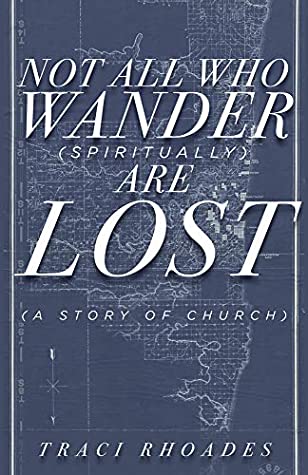
This was one of those books that I got for its title. At the height of covid, when the deconstruction was real, I was looking for testimonies of those who had passed through ecclesiastical storms, and were able to perceive the Tolkeinesque adventure within the journey. This was not that book. The title of Not All Who Wander (Spiritually) Are Lost is verging on literary clickbait.
Traci Rhoades’ book is basically autobiography told through the sequence of her church involvement. Perhaps its beauty is in its sheer ordinariness (“Overall, when I look back on my early years in the church, I’m more thankful than disillusioned”, page 12). Like all ordinary stories she reveals the easy and comfortable times, and the storms that have tossed her about. From “flannel boards” and “vacation Bible school” (page 3) to bewilderment at power games in leadership, Rhoades is descriptive, rather than analytical. The church she describes is cultural phenomenon rather than theological wonder. And while she is not naive, she never reveals the sort of crisis that is relevant to me and mine in this season.
I’ve been in church forty-plus years. Don’t think for a minute it’s always easy or there aren’t times when hefty doses of grace and forgiveness are needed, yet I’ve never considered leaving the church… Generations of my biological family have faithfully attended church, and I know I have a place in that heritage. (Page 23)
The anecdotes from others are more helpful, and a bit more raw and real (e.g. “a story of a woman who had to leave for a time in order to let Jesus heal her heart.”, page 29). Nevertheless, this whole book is more like an easy-listening podcast than a serious grappling with serious things; it’s a glorified pinterest post. Sometimes, as she listed the various ways in which she was involved in the consumeristic programs of her latest context, I was simultaneously agitated and bored. What person of depth measures a church by a “parking lot” test and the rest of the quality-control criteria she employs (page 82)? The thought of pandering to such proclivities palpitates this pastor’s pulse!
Perhaps the value of this book lies here: It is presented without guile. Occasionally I was even reminded of those heady days in my youth when the mission of the church excited me and when I could agree with Rhoades’ Sunday School teacher, “I was glad when they said to me, ‘Let us go to church'” (page 3). Those days are well and truly gone, but there is something of my “first love” in that sentiment which softens my cynicism even if it leaves me feeling wistful and sad at innocence gone. I still love the church of God, mostly in its hidden guises, but I am not void of delight, and sometimes it has the whiff of childlike wonder.
The Jesus I met in the churches of my youth is the same Jesus who meets me in this spiritual wilderness. Jesus is the one who has formed and filled me. Jesus is the one who leads me, saves me, calls me. The Jesus I asked into my heart as a child is the same Jesus who I gave my on-fire heart to in my early twenties, and is the same Jesus I entrust my broken heart to now. (Page 92, quoting “Aaron”)
I read this book, and feel both annoyance, and, at the same time, a reminder to not disparage a way of being church through which God has blessed many, despite its manifest inadequacies.
 Wade Mullen’s Something’s Not Right has a foreword by Diane Langberg, which is an instant recommendation. The subtitle speaks to it’s purpose: Decoding the hidden tactics of abuse and freeing yourself from its power. It is not, so much, a therapeutic book; it is a resource, a form of training, that informs those moments when we know something is simply not quite right.
As such, Mullen provides an antidote to gaslighting. We know from experience that those who go through ecclesiastical trauma do a lot of soul searching. Most of us are, rightly, grounded in a desire to not rock the boat, to not tear down needlessly, and, in the most appropriate sense of it, to keep any rebellious spirit in check. Self-reflection is important, but it can be exploited by abusive perpetrators and toxic cultures. When we get tangled up, asking “What’s wrong with me? What have I done wrong? Am I going mad?”, the real issues (external to ourselves) avoid the exposure and the light they need for resolution. In contrast, Mullen helps us to be aware of the real toxicity, and to “advocate for yourself” (e.g. page 172).
Abuse impairs your ability to make sense of what is happening. It spins you around and disorients you. (Page 79)
The value of this book is it’s applicability where toxicity is more subtle than blatant. Gill and I have not had many dealings with overt corruption but we have run the gamut of the covert. In our time we have experienced shunning and have had silence manipulated into us. We have been left capsized in the wake when perceptions are valued more than reality, and when dysfunctional institutions and offices are too big to question, let alone fail. We have been squeezed into false narratives which comfort the insecure but powerful. I found descriptions of all these sorts of things on the pages of this book, and it was a strange comfort to read; perhaps we’re not crazy, just hurt.
Mullen speaks of silencing (e.g. page 13), different types of secret-mongering (page 17), the ways in which flattery is used (page 38), financial dependence (page 40), and attempts of using “past trauma against you” (page 174). A diagram (page 71) simply titled “dismantling your world” sums it up. He describes the protection of the indispensable over against the vulnerable (e.g. page 27). He speaks of narcissism and the complicity of those who prefer sterile comfort to healthy conflict (“peace when there is no peace”, page 155). He describes the loss of agency (“a piece of her identity fell off with each step she took into the culture of the church”, page 57). To a greater or lesser extent, we’ve seen it all, and personally experienced more than enough of it.
I think many live with untold stories, not because they never want to tell them, but because they never encounter safe people and safe places where their stories can be heard. (Page 170)
Here’s a piece of truth behind why we are no longer enamoured by the religio-industrial church, and the glamour of success: “No amount of patience will produce change in an abusive community that isn’t willing to surrender its legitimacy and pursue the entire truth” (page 166). Those who seek to save their lives will lose it, you see. But that opposite is also true; and we have ever aspired to call God’s people to lay themselves down, and so be saved.
I read this book and I feel validated.
And, in a healthy way, I also feel warned. As a church leader I am privileged to be invited into the vulnerable parts of people’s lives. Church is its best when it is not shallow, aloof, “professional,” but embraces vocational vulnerability and communal exposure to the grace of God. As Mullen describes those who are complicit in toxicity, I am marking it in myself: Have I made that excuse? Have I blinded myself to that flaw? I am aware of my faults; we all bring a degree of toxicity to our relationships.
Sometimes, it is even expected of us. I have long observed that I know a few pastors with a messianic complex, but I know many churches who put their pastors on a pedestal. Mullen helps me to not buy into that game, to detect when it’s happening, and to climb down to the ground, no matter the cost, or the disappointment I bring others.
I read this book and I feel wary of myself, but also equipped, perhaps, to have some blind spots revealed.
And finally, I read this book and I feel some hope. I see in my own family some of the wounds Mullen describes, including his own. Cynicism, despair, and hopelessness can easily abound. Yet Mullen seeks to move in the opposite spirit. And he does this with aspiration that I think I can share: “I look for and cultivate beauty.” (page 177)
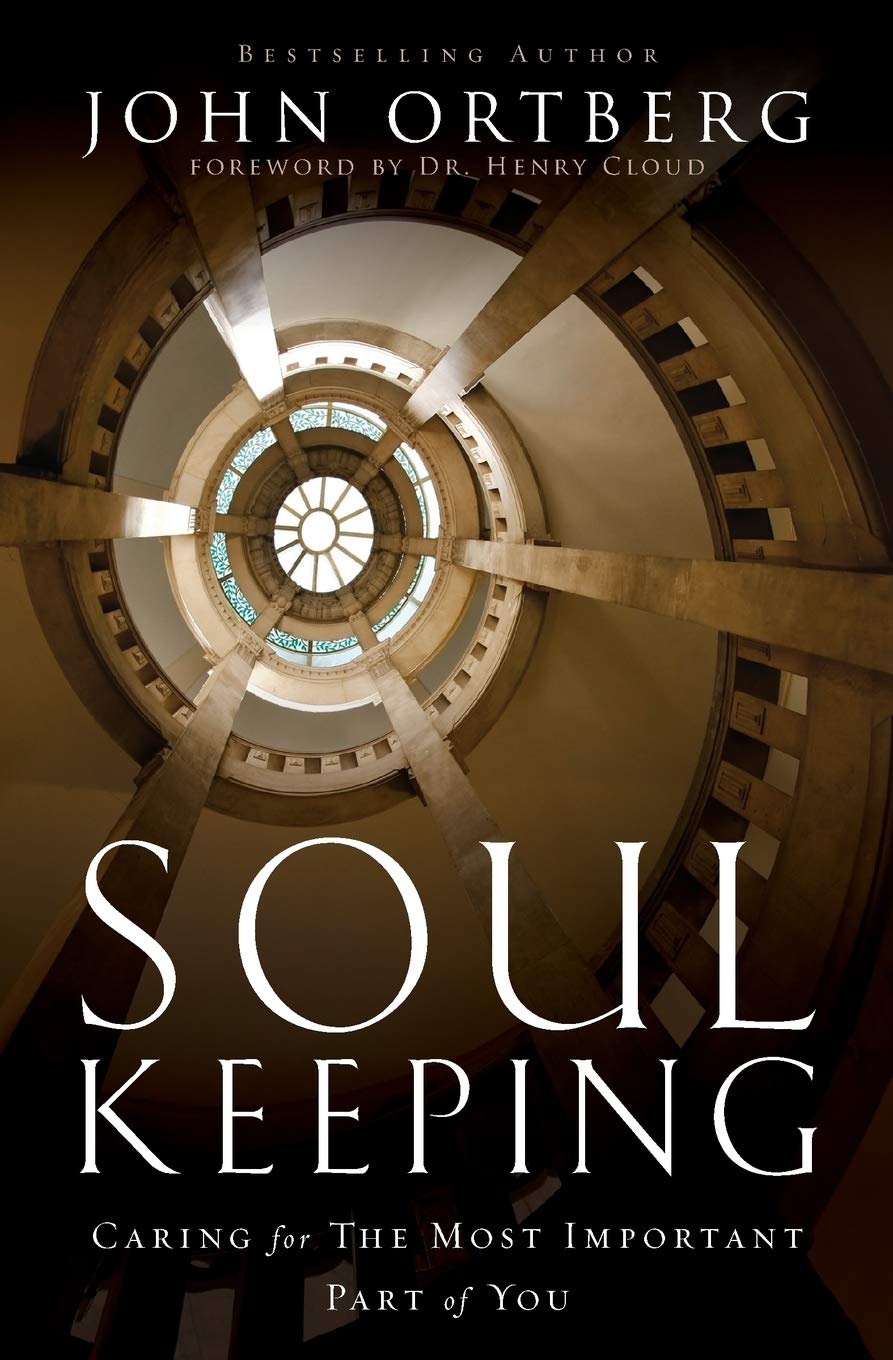 It seems useful to conclude thinking about ecclesiastical trauma with a book that is more positive; Ortberg’s Soul Keeping is about wellbeing.
It intrigued me for a number of reasons, not least of which is my appreciation of a growing movement of Christian spirituality that is hard to define but is nevertheless real. It is theologically evangelical, pyschologically mature, sociologically aware, missional and holistic. It is epitomised by the likes of John Mark Comer, Tish Harrison Warren, and Jon Tyson. Look in to their background and you find influences such as Ortberg, and before him, Dallas Willard. This book, in many ways, is simply Ortberg’s homage to Willard. There’s even a line about the ruthless elimination of hurry (page 20) that someone “stole”.
Ortberg considers “the soul” within the “operating system of life” as “the capacity to integrate all parts [body, mind, will etc.] into a single whole life” (page 42). “…like a program that runs a computer, you don’t usually notice until it messes up.” This concept of integration is at the heart of it all. And it is foundational to some of my own recent endeavours to bring emotional, physical, and spiritual health together.
In this book, therefore, we ponder ways in which our way of life can damage our soul, such that we are more dis-integrated. In doing so, there is a nuanced realignment of some of our church rhetoric: A “lost” soul is not about “destination”, but “condition” (page 62). Salvation is not just about the location of our eternity, but of regeneration of soul in the here and now; it is about health and our soul finding it’s home. “Sin fractures and shatters the soul” (page 67), and the gospel is the path of restoration. Eternal life is meant to start now.
In this way our theology is grounded. Idolatry isn’t mere metaphysics, it’s essentially addiction; a “finding oneself” in something or someone other than our maker. Worship isn’t mere duty of some ethereal benefit; it’s the upwelling of our very selves towards the source of life, our maker.
The soul must orbit around something other than itself – something it can worship. It is the nature of the soul to need. (Page 85)
The exhortation of the book is a gentle assertion of agency, by the grace of God. Ortberg spins a parable in his prologue (page 13) of a fresh stream flowing from ancient roots to bring water to a village. If the stream is kept well – if it is cleared of detritus, and kept to its course, and resolved of pollutants – it is life-giving, and a bubbling joy. If left unattended, it can go stagnant and bring death. The exhortation is this: The stream is your soul, and you are the keeper.
Here there’s a connection with the theme of ecclesiastical trauma. There are two facets to this. Firstly, trauma is a damaging of the soul. It is usually inflicted by those who have not kept their soul well; and who deflect that responsibility onto others. (An aside: vicars have the “cure of souls”, but that does not make us the springs of water that others can empty; it is to help others find the source of life, and equip them to tend to their own stream). Secondly, for myself at least, the healing of that trauma is about re-integration more than anything else (including management-speaks words such as resilience).
In this light, trauma can lead to worship. “God has placed eternity in our hearts” and pain reveals our hunger for it. That is grace. There’s a reason why it’s called the “dark night of the soul” (see chapter 16, page179). God moves, so that we might follow. That is love; it is how he woos us and draws our attention to himself. And therefore pain builds maturity, and hope. Ortberg puts it like this: “There will be great pain, and there will be great joy. In the end, joy wins. So if joy has not yet won, it is not yet the end” (page 113). The resolution of my own trauma is, paradoxically, an honest awareness of it (so that I can tend to my stream) without giving it my focus. Trauma may block or hinder my soul and needs attention, but it is never able to be my source. Integration begins in worship, and attending to the presence of God.
Which is where my pondering ends, at the end of a busy year. There is a sadness in realising that much of the year ahead will need to be about soul-keeping, being aware of the pollutants that leak and the blockages that tumble from many ecclesiastical machinations. But there is also resolve. I cannot build the house; unless the Lord builds it, it is all in vain. “I cannot live in the kingdom of God with a hurried soul. I cannot rest in God with a hurried soul.” (page 134).
I will begin 2022 by discipling my soul, like I might disciple a child. Awake, my soul, and sing.































 The deconstruction is real. The pandemic season is lingering and the waves of its wake are more disruptive, more disturbing, more confusing than the sudden crisis with which it struck.